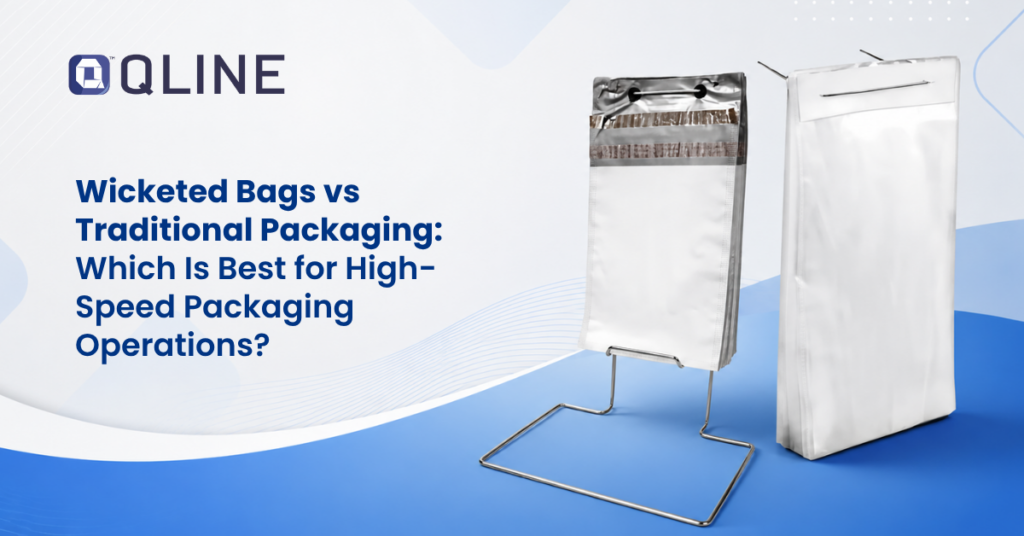

Packaging speed directly affects production efficiency, labour costs, and order fulfillment across food processing, textiles, e-commerce, and manufacturing. Wicketed bags are designed for automated and high-speed operations, enabling faster, more consistent packing than many traditional methods.
What Are Wicketed Bags?
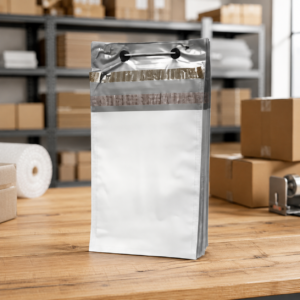
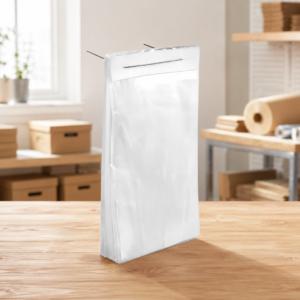
Wicketed bags are pre-opened poly bags stacked and impaled on a metal wicket (rod) so machines or operators can dispense them quickly. They work with automatic and semi-automatic packaging machines: the machine slides a bag off the wicket, fills it, then seals or staples it. Common materials include polyethylene (PE), high-density PE (HDPE), and co-extruded films for durability and clarity. Typical industries: food and bakery, frozen goods, textiles, e-commerce, personal care, and industrial components.
What Is Traditional Packaging?
Traditional packaging covers loose poly bags, manual packing, standard plastic bags, cartons, and flexible packaging handled largely by hand. Many small manufacturers and artisanal units in India still rely on these methods due to low volumes and limited automation investment.
Wicketed Bags vs Traditional Packaging
Feature | Wicketed Bags | Traditional Packaging |
Packing speed | Faster | Slower |
Automation compatibility | Excellent | Limited |
Labour requirement | Lower | Higher |
Product consistency | High | Moderate |
Waste reduction | Better | Depends on process |
High-volume production | Excellent | Less efficient |
Operational efficiency | Higher | Lower |
Benefits of Wholesale Wicketed Bags for High-Speed Packaging
- Faster packaging operations: Machine-fed wicketed bags cut cycle time per pack, increasing throughput.
- Reduced manual handling: Fewer touchpoints lower error rates and contamination risk—important for food and pharma-related lines.
- Improved production efficiency: Consistent bag presentation reduces machine jams and downtime.
- Better machine compatibility: Designed for automated packaging lines and high-speed packaging bags applications common in Indian FMCG and e-commerce fulfilment centres.
- Consistent packaging quality: Uniform bag size and seal position improve presentation and reduce rework.
- Lower labour costs: Automation reduces dependency on large packing crews, beneficial in India where scale-ups aim to control costs.
- Customisation options: Sizes, thickness (gauge), gussets, air holes, hang holes, and reclosable options available to match product and machine requirements.
Industries That Benefit Most from Wicketed Bags
- Food processing and bakery products
- Frozen foods and ready-to-eat lines
- Textile industry (pieces and garments)
- Household and personal care products
- E-commerce fulfilment centres
- Industrial manufacturing and component suppliers
When Should You Choose Traditional Packaging?
Traditional packaging still fits when:
- Production batches are small or irregular.
- Packing lines are manual or semi-skilled.
- Budget prevents automation investment.
- Products require specialty presentation or bespoke packaging not suited to wicketed formats.
How to Choose the Right Packaging Solution
Consider:
- Production volume: High volumes favor wicketed bags and automated lines.
- Packaging speed: Required throughput per shift determines automation needs.
- Labour availability: Limited labour favors automation.
- Machine compatibility: Check machine specs for wicket spacing, film strength, and wicket hole placement.
- Product type: Food-grade films, anti-static film, or breathable bags may be necessary.
- Budget and scalability: Compare upfront machine costs with long-term labour savings and reduced waste.